What the agent looks for on screen
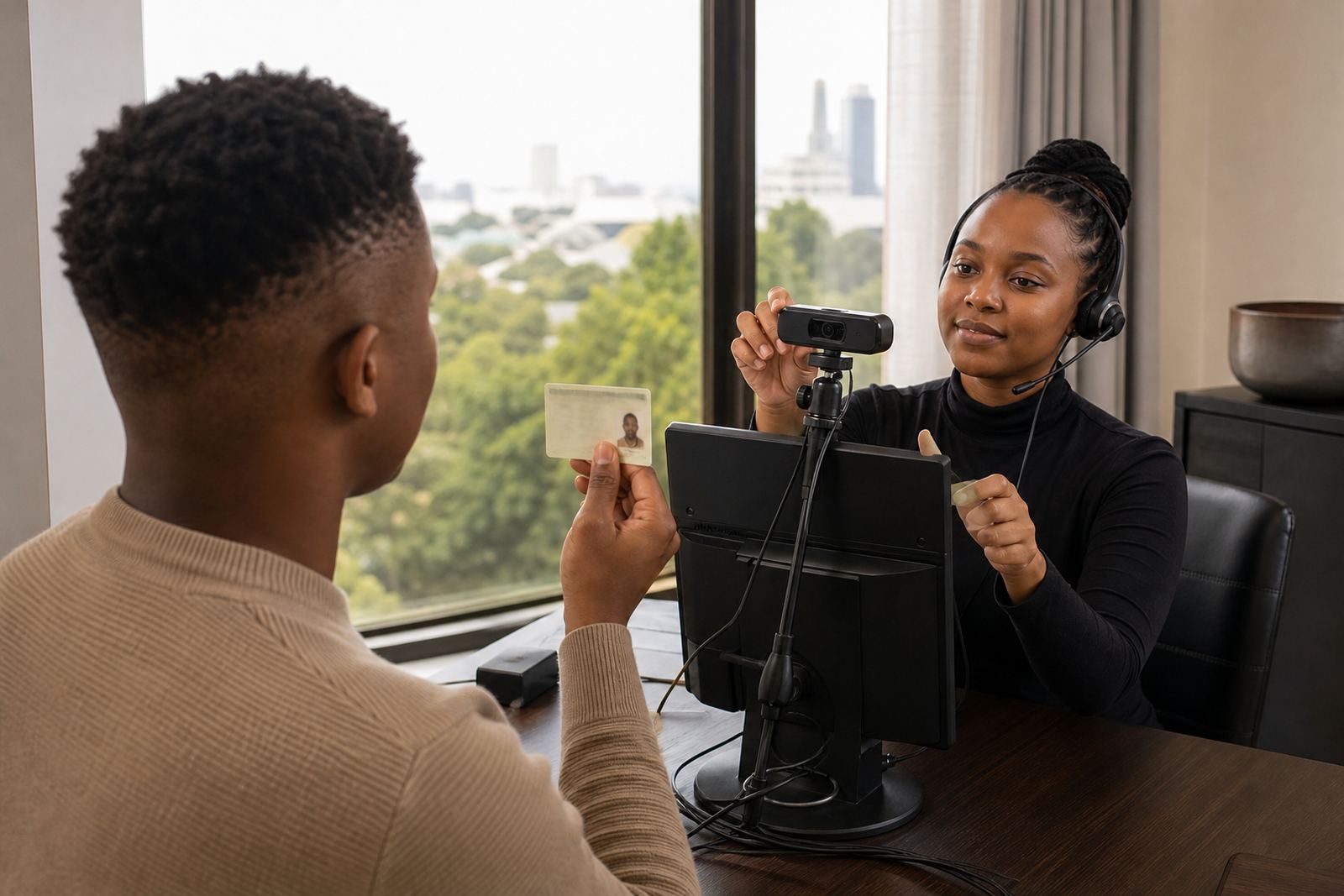
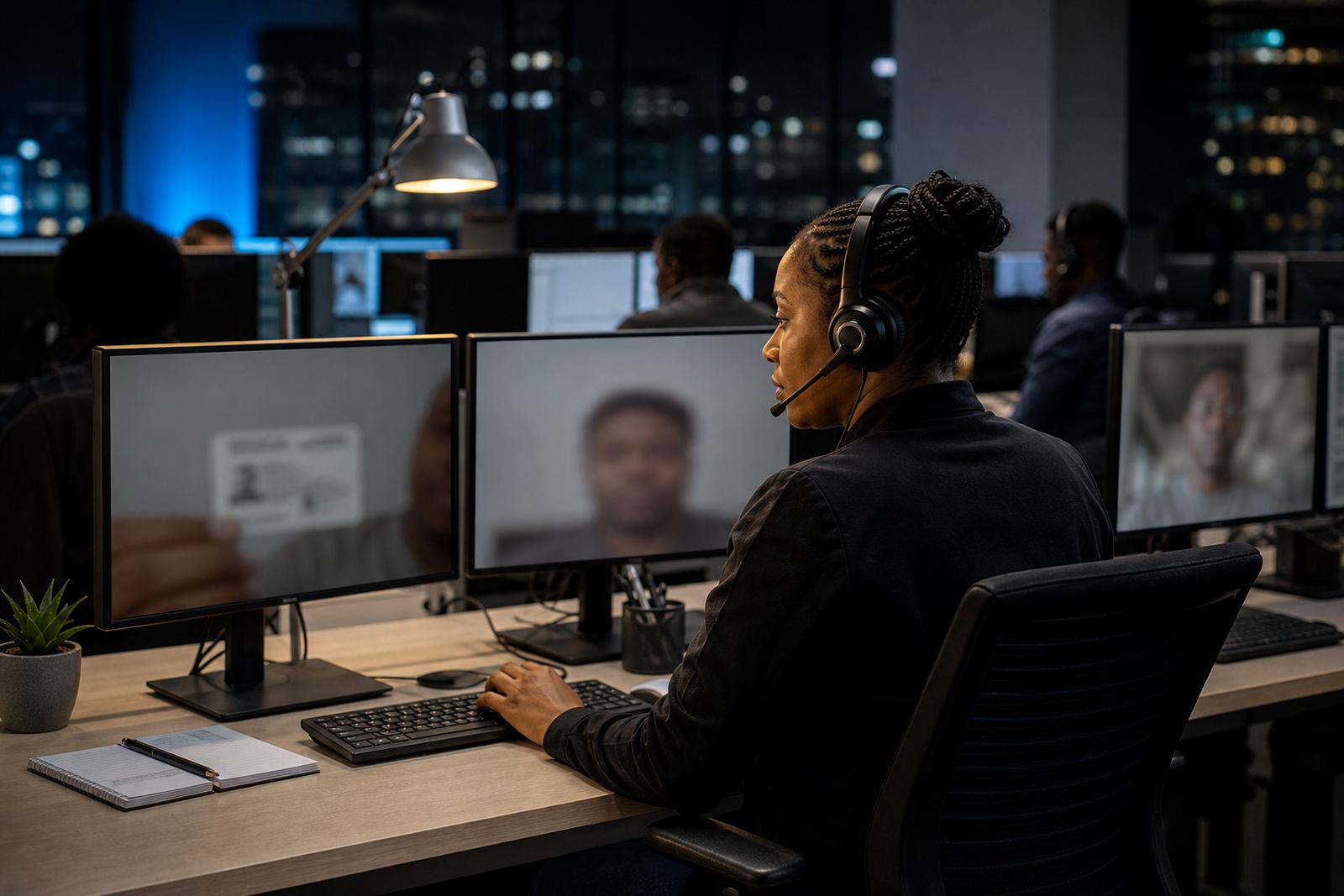
A guided video session usually starts with a clear view of the person, the ID document and enough light to see both without strain. The agent is not trying to act like a machine. The job is to compare the face in front of them with the photograph or image on the document, then decide whether the details line up with the session record.
That comparison is not only about obvious features. Hair can change, glasses can be removed and facial hair can shift a person’s look from one month to the next. Good checking looks at bone structure, eye spacing, age consistency, image quality and whether the person is steady and present through the session.
- Front facing capture with no harsh shadow across the face
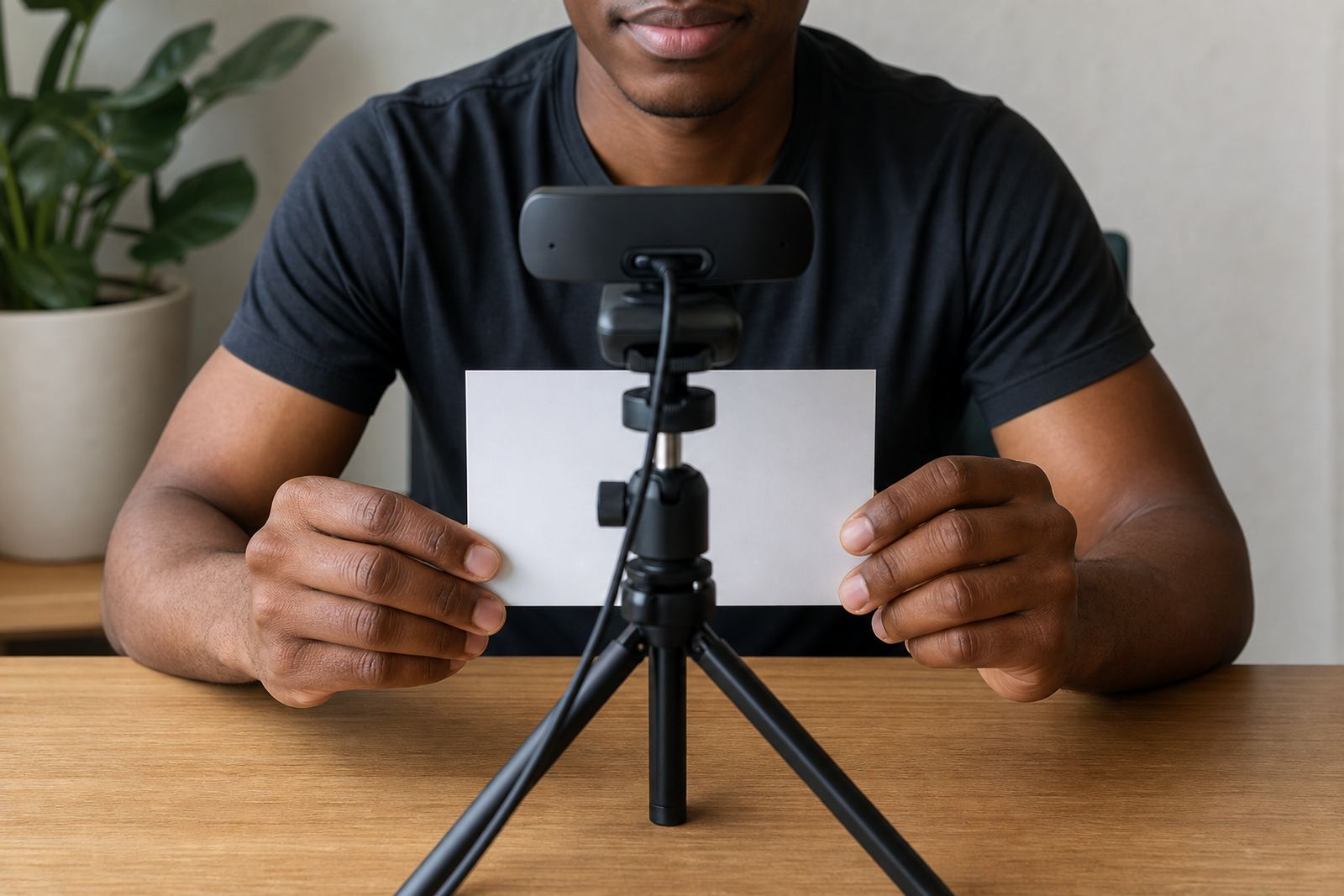
- ID document held flat enough for the printed details to stay readable
- Face and document shown in the same session, not from separate uploads
- Signs that the person is responding live rather than using a still image
Liveness checks stop flat images from passing as a person
Liveness checks help the team confirm that a real person is present during the video call. The method can include small head turns, a blink, a simple guided movement or a short phrase spoken into the camera. The aim is to make it harder for a photo, screen replay or other static image to pass as a live applicant.
This matters where account opening happens remotely, especially when the client base is spread across Johannesburg, Pretoria, Cape Town, Durban and Gqeberha. A face match on its own can still be fooled by poor footage. Liveness adds another layer, and it should sit inside the same controlled session, not as an afterthought.
- Short prompts keep the session focused and easier to review
- Checks should fit the device being used by the customer
- Low resolution video can weaken both face comparison and liveness review
- Staff need a repeatable script so each session follows the same steps
Why document capture and face comparison must work together
Face comparison is only one part of the wider identity check. If the ID image is cropped badly, glare covers the photograph or the details are soft, even a strong face match may not be enough for a useful review. The document and the face need to support each other.
In practice, that means the session should guide the customer through a clean document capture before the face check starts. For South African businesses working under FICA driven customer due diligence, the process needs to collect the right evidence in a way that can be reviewed later. Consent and record keeping also matter, because the session forms part of the audit trail.
- Check the document edges so key details are visible
- Keep the camera steady to avoid blur on the ID image
- Record the same customer name across the application and session notes
- Store the session record in line with the client’s retention rules
How our team sets up a workable session flow
Our Rosebank team builds the session around the way the client already onboards customers. Some businesses want a short guided check before account creation. Others need a tighter internal flow with approval steps, escalation points and a clear handover to their operations staff. The point is to reduce friction without losing control of the verification step.
That often starts with workflow mapping, then moves into agent script design, API coordination and pilot launch support. Naledi Adonis oversees operations, while Jared Jantjies handles integration planning with technical teams. Anele Nortje prepares training sessions so client staff know how to read the session, spot a weak match and handle a failed capture without turning the queue into a mess.
- Workflow mapping for online account opening journeys
- Integration planning for client systems and verification steps
- Staff training for teams that review or support the session
- Escalation design for cases that need a second look
A Johannesburg example with a real customer journey
A lending team in Sandton may need remote checks for customers who apply after office hours and never visit a branch. The session begins with the customer showing the ID document on camera, then the agent asks for a live face view. The face comparison is done in the moment, while the agent watches for consistency between the person, the document and the application details.
If the image is blurred or the applicant turns away too often, the session may need a fresh capture or an escalation. In a better session, the photo is clear, the person is steady and the document details can be read without guesswork. That is where good training helps, because the team knows when to proceed and when to stop the flow for a better check.
Keeping the checking standard steady across branches and teams
Face comparison can drift if different teams improvise their own habits. One agent may ask for too many repeats, while another may accept a poor image because the queue is busy. Quality monitoring keeps the standard steady, and refresh training helps staff stay consistent when devices, customer behaviour or internal rules change.
For clients operating across Midrand, Pretoria and the coastal cities, the same verification logic should apply even when the local teams sit in different offices. Sibusiso Gamieldien leads quality assurance, Megan Vermaak supports client success and Leila Petersen oversees the verification team. That structure helps the process stay practical, not overcomplicated.
- Quality monitoring catches weak captures before they spread through the process
- Refresh training helps new staff learn the same review standard
- Change request support keeps workflow updates controlled
- Go live stabilising helps a new session flow settle into daily use