When the customer is already online, the branch becomes the detour
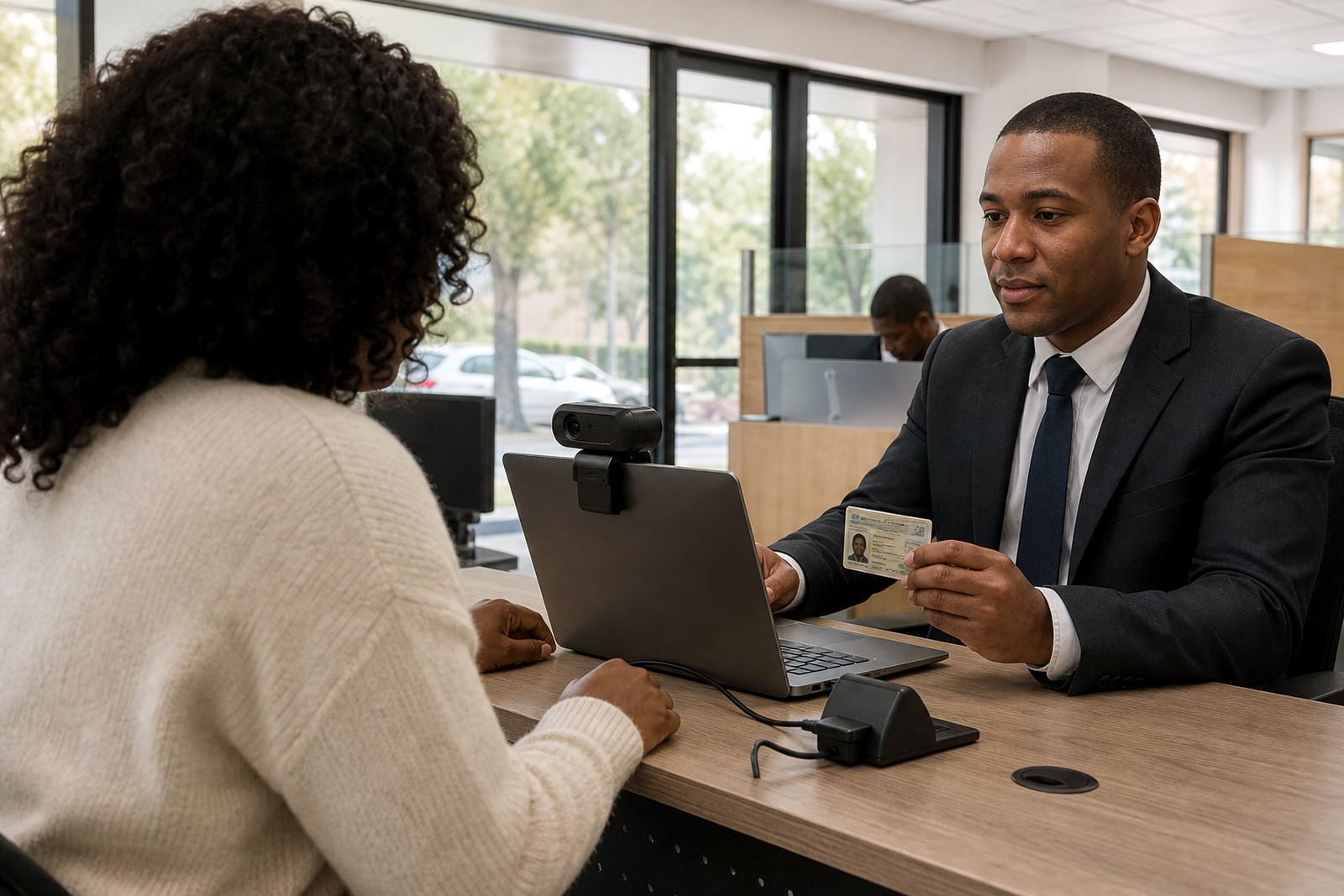
In-person checks work well when a customer is already near a branch and the business has staff, counters and document handling in place. The process is familiar: the customer arrives, presents an ID document, signs where needed and the team checks the face against the document before the account moves forward.
That model suits some lines of business, but it asks the customer to travel and it asks the business to keep a physical point open for identity checks. For clients in Johannesburg, Pretoria, Cape Town, Durban or Gqeberha, a branch visit can mean parking, traffic and time lost from work. It also means the business carries the cost of seating, staffing and secure handling of paper or scanned copies.
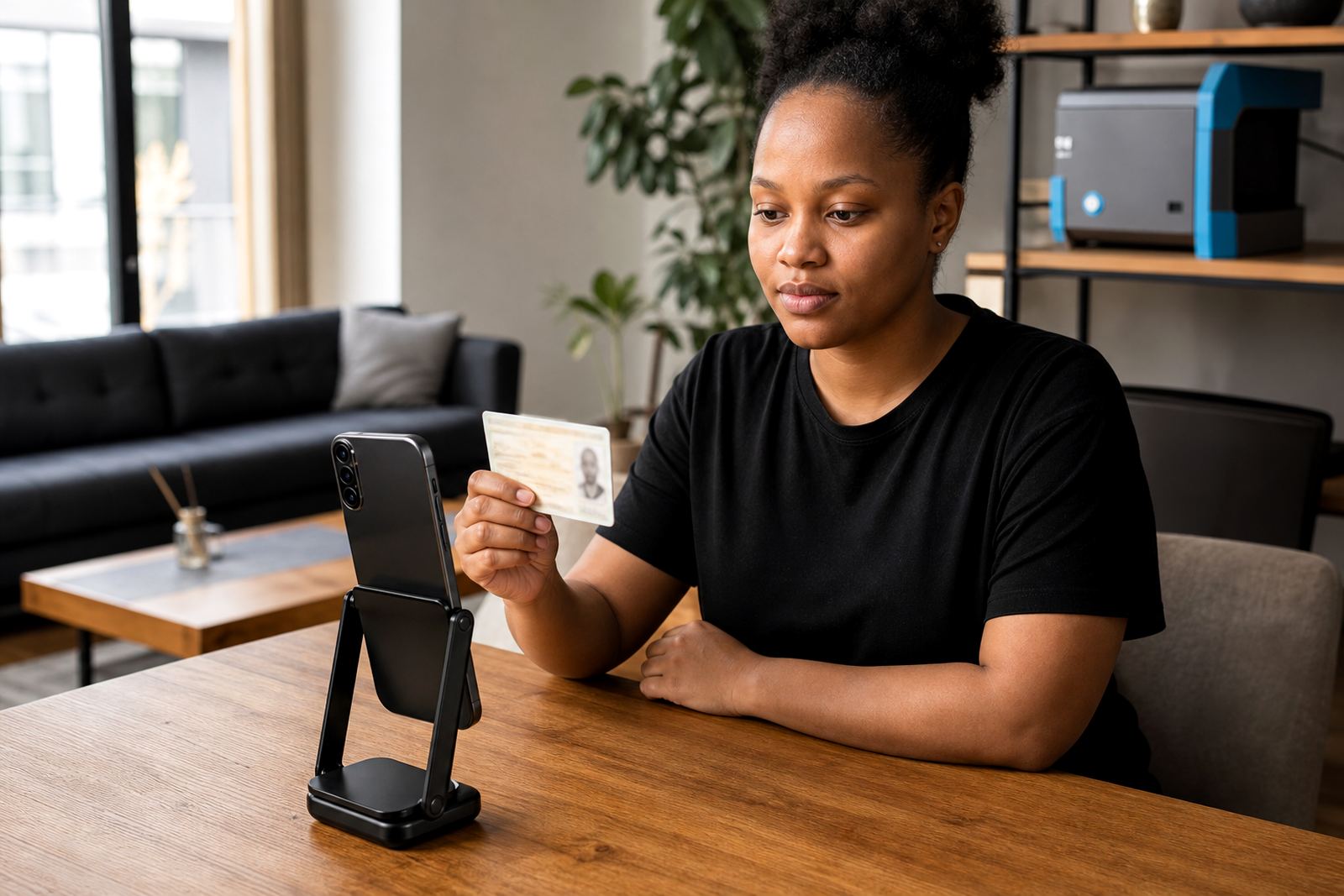
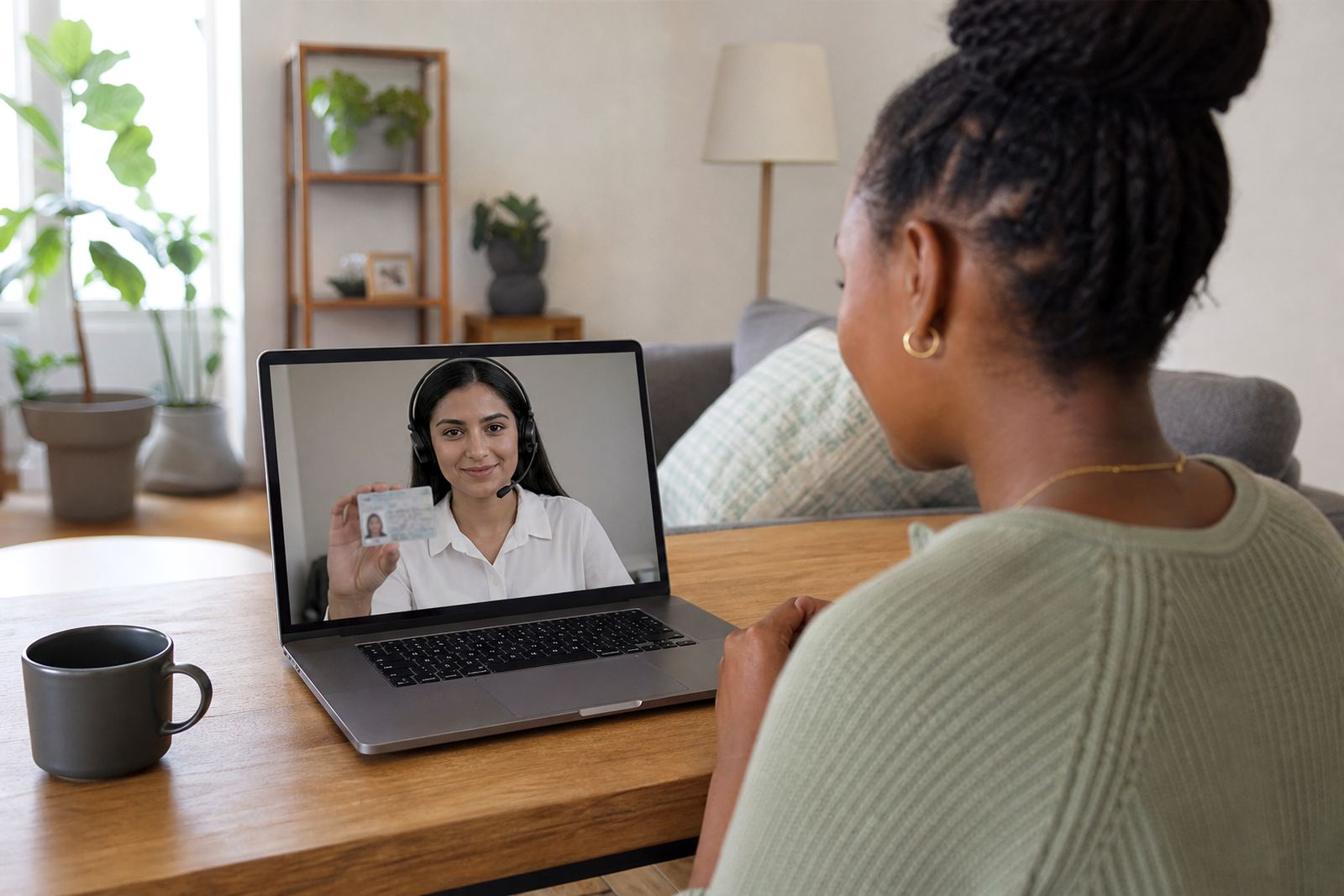
Remote video identity verification changes the route. The customer joins a guided session from a phone or computer, the agent asks for the ID document, checks the image and compares the person on screen with the document holder. The session can also include liveness checks, which help reduce the risk of someone trying to present a still image or recorded clip instead of a live person.
- Branch visits suit walk-in traffic and face-to-face service counters.
- Remote sessions suit online onboarding and distributed customer bases.
- Both methods still need sound record keeping and clear consent.
What a guided video session actually needs to work
A video session is not just a call with a camera. It needs a clear flow, a trained agent and a script that keeps the customer moving without confusion. The agent has to know when to ask for a document, when to pause for a better angle and when to repeat a check because lighting or camera quality is poor.
Good sessions depend on small details. The customer should be able to frame the document, show the full face and hear simple instructions without chasing a long explanation. The business should also keep a record of what was checked, what was captured and what the customer agreed to during the process, especially where consent forms part of the record trail under POPIA minded handling.
- Stable internet matters, but the process should still guide users who are on mobile data.
- Agents need a script that works across device types and camera qualities.
- Record keeping should link the session, the document and the decision made.
- Quality control should catch weak captures before they become account problems.
That is where workflow mapping, agent script design and quality monitoring make a real difference. A branch process can rely on the room, the counter and the person at the front of the queue. A remote process has to carry the same control through the screen.
Where in-person checks still hold their ground
There are settings where an in-person check is still the cleaner option. A business may want direct handover of original documents, or it may already have a branch network that serves a local customer base every day. Some customers also prefer face-to-face contact when the transaction is sensitive or when the paperwork is unusually involved.
In-person work can also suit teams that need to inspect documents alongside other onboarding steps, such as signing forms, taking a printed declaration or resolving a query on the spot. If the customer is nearby and the branch is already set up for it, the process can feel straightforward.
Even so, branch checks have a practical ceiling. They are limited by opening hours, floor space and the number of staff on duty. A branch in Sandton or Midrand may move quickly at one time of day and stall at another. A remote model can spread the same verification flow across a wider geography without asking customers to move through the city.
- Useful when the business already runs a staffed service point.
- Helpful where paper originals or wet signatures are still part of the process.
- Less useful when customers are spread across multiple towns and provinces.
Where remote video checks pull ahead
Remote verification tends to suit businesses that sign up customers online, sell across provinces or want one standard process for many branches and channels. Instead of moving the customer to a counter, the business brings the check into the onboarding flow. That keeps the moment of identity verification close to the moment of application.
The operational gain is not only convenience. Remote sessions can be scheduled around the business process, which helps teams keep the same script, the same checks and the same record format. Integration planning then becomes important, especially where the verification outcome must feed into a CRM, onboarding system or internal approval flow.
For a credit provider, insurance team or regulated onboarding operation, the value sits in consistency. One trained team can monitor the sessions, review edge cases and support refresh training when the flow changes. Escalation design also matters because weak images, mismatched details or unusual customer behaviour need a clear path out of the main queue.
A Rosebank-based team working with clients in Cape Town and Durban may never meet the customer in person, yet still handle the core checks with discipline. That is the point of a well-built remote process: it travels better than a branch visit and still keeps the human review where it belongs.
The South African details that usually decide the format
Local conditions shape the choice more than many businesses expect. A group with a single office in Johannesburg may lean toward in-person handling for high-touch accounts. A business with national sign-ups usually needs remote sessions because customers in Pretoria, Gqeberha and smaller outlying areas should not be pushed into unnecessary travel.
There is also the question of training. Branch staff can be excellent at welcoming customers, but video verification needs a different rhythm. The agent has to manage pacing, camera angles, privacy, document capture and the moment where a check must be repeated. That is a different skill set from a front counter handover.
When a team compares the two models, these points usually matter most:
- Customer travel and branch access.
- Document quality and face comparison on screen.
- Training effort for agents and supervisors.
- Reporting needs for audit and review.
- Integration with the wider onboarding flow.
For many South African businesses, the answer is not one method only. Some accounts can move through video verification, while higher touch cases still go to a branch or office where the process needs closer handling. The useful part is making that split on purpose, not by accident.
A practical choice for onboarding teams, not a theory exercise
The comparison comes down to the job in front of you. If the customer is local, the branch is already working and the verification step is short, in-person checks may be enough. If the customer base is spread out, the onboarding is digital and the business wants one controlled process, remote video verification is usually the cleaner fit.
PersonVideo ID works with South African businesses that need the remote side to hold up in practice. That includes workflow mapping, API coordination, staff training, pilot launch support, operational reporting and go live stabilising. The work is less about replacing human judgement and more about giving that judgement a better route through the process.
When the check sits inside a clear script and a consistent record trail, the business spends less time repairing avoidable errors. The customer also gets a process that feels organised rather than improvised, which matters whether the session starts in Rosebank or ends with a client in another province.